
The Regulatory Context
What the 2029 deadline means
Zimbabwe's Tobacco Industry and Marketing Board has confirmed a 2029 deadline for the elimination of firewood as a curing fuel. Combined with EU deforestation regulation requirements, tobacco merchants face compounding compliance obligations that cannot be solved through procurement alone.
What is required
- Elimination of firewood as a primary curing fuel by 2029
- Verifiable ESG supply chain documentation for international buyers
- EU deforestation regulation disclosure for tobacco entering EU markets
- Diamond Standard certification for TIMB compliance
Consequences of non-compliance
- Loss of BAT, PMI and JTI buyer contracts requiring ESG disclosure
- Ineligibility for EU market access under deforestation regulation
- Reputational risk as sustainability reporting becomes mandatory
- Continued exposure to firewood supply price volatility
The Marillion solution
- Indigenous woodlots on contracted farmers' own land
- Certified firewood replacement supply within the 2029 window
- Diamond Standard ESG audit trail from day one
- Verified carbon credits offsetting residual emissions
The Status Quo
Firewood-dependent curing barns — this ends in 2029.
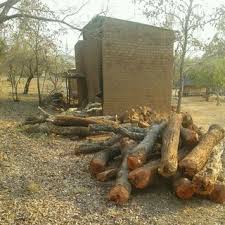
Tobacco curing barns and the timber they consume — Zimbabwe.
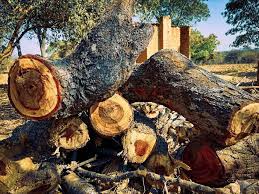
Active curing cycle — the current method.
Every cure consumes hardwood. By 2029, Zimbabwe's tobacco industry must transition to sustainable biomass — or lose the cure.
The Programme
What you get
ESG-compliant supply chain
Demonstrate a verified sustainable cured tobacco supply chain to BAT, PMI, JTI and EU buyers. Diamond Standard certification built around your specific compliance obligations.
Verified ARR + BCR carbon credits
Each woodlot generates both Afforestation/Reforestation (ARR) credits from growing trees and Biochar Carbon Removal (BCR) credits from the pruning-waste pyrolysis loop. Listed on international voluntary carbon markets.
30-year turnkey management
Marillion designs, establishes, monitors, and manages every woodlot. You get the ESG outcome and the credit income. Zero internal forestry expertise required.
Buyer-ready documentation
Full Diamond Standard audit trail, satellite verification reports, and credit retirement certificates formatted for BAT/PMI/JTI/EU deforestation regulation disclosure requirements.
The Numbers
Programme economics
Key figures from the MarillionEx locked methodology. These are verified project-level metrics, not projections.
Establishment cost
$4,749/ha
Fully financed by Marillion
Project IRR (Year 15)
11.1%
Timber + carbon blended return
Net timber revenue
$21,532/ha
Over 30-year project life
Landowner revenue share
20%
Paid directly to farmer
Getting Started
How to engage
Initial consultation
We map your contracted farmer base against our eligibility criteria and model the woodlot programme that fits your specific merchant footprint. Typically a 60-minute call followed by a written proposal.
Site assessment & woodlot design
Marillion field officers conduct GPS surveys and satellite analysis on eligible plots. We produce a woodlot design for each site — species mix, phasing plan, yield projections — which forms the basis of the land lease.
Establishment & 30-year management
We plant, protect, monitor and certify every woodlot under the Diamond Standard protocol. You receive annual ESG reports and credited carbon data. The programme runs for 30 years with five-year renewable lease terms.